What it’s like to live in the world’s most liveable cities in 2026
The Economist Intelligence Unit’s latest Global Liveability Index names the world’s top cities. We asked residents to share the everyday experiences that make their hometowns such exceptional places to live.
Copenhagen has retained its title as the world’s most liveable city for a second consecutive year in the Economist Intelligence Unit’s 2026 Global Liveability Index.
The annual ranking assesses 173 cities worldwide across stability, healthcare, culture and environment, education, and infrastructure to identify those offering the highest quality of life. Vienna, Melbourne, Sydney and Zurich rounded out this year’s top five, reflecting both Europe’s enduring dominance and Australia’s continued strong showing.
To find out what life is really like in the top-ranked cities, we asked residents why they love living there – and where they take visitors to experience the city like a local.
 Getty Images
1. Copenhagen
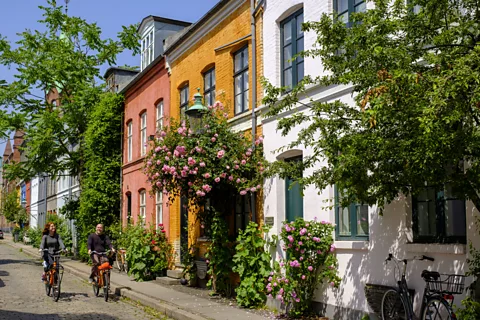
Taking the top spot for the second year in a row, the Danish capital earned perfect scores in stability, education and infrastructure, and one of the highest culture and environment scores of any city. For residents, that translates into a lifestyle where simple pleasures are built into the movement of the city.
Top 10 most liveable cities in 2026:
1. Copenhagen
2. Vienna
3. Melbourne
4. Sydney
5. Zurich
6. Geneva
7. Osaka
8. Adelaide
9. Vancouver
10. Tokyo
“You can bike to work, jump in the harbour after and be home for dinner. It’s not a special day, it’s just Tuesday,” said Laura Amira Kassem, an MD and PhD student who has lived in the city for eight years. “That combination of cycling infrastructure, swimmable urban water and a genuinely walkable, bikeable scale is something I haven’t found anywhere else.”
Kassem starts her days with an early run somewhere quiet, such as Utterslev Mose or along the lakes, followed by breakfast, coffee and, in summer, a swim.
She starts any visitor tour in Nørrebro, her culturally mixed neighbourhood. “Greengrocers, kebab shops and gold shops sit next to sourdough bakeries, natural wine bars and small dinner spots,” she says. From here, she recommends grabbing bikes for a swim and coffee by the water in Nordhavn, followed by a lunch of smørrebrød, the traditional Danish open-faced rye bread sandwich, at Det Gamle Apotek.
In the evening, runners can join Loopet, a 3km (1.8-mile) loop around Fælledparken where the city’s running community gathers. “All are welcome,” Kassem says. “Run, catch up with friends and finish with dinner sitting outside.”
 Getty Images
2. Vienna
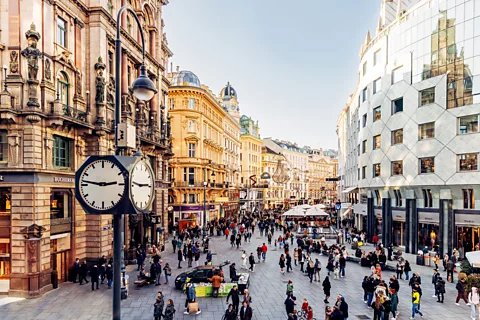
The Austrian capital may have ceded first place to Copenhagen last year, but its perfect scores in healthcare and education keep it at number two. For residents, Vienna’s liveability is found in the ease of getting around, either via public transportation or walking, and appreciating the details along the way.
“My daily ritual is my commute to work along the Ringstraße, taking one of the iconic trams,” said Franziska Hochmüller, who works at the Vienna Tourist Board. “Instead of scrolling through my phone, I love to read a book or simply watch the beautiful buildings pass by. It’s a small detail that reminds me every day how extraordinary the ‘ordinary’ in Vienna really is.”
“You hardly need public transport within the 1st to 9th districts,” adds Roland Eggenhofer, who works in sales and marketing at Hotel MOTTO. He likes to take visitors to the 6th and 7th districts, especially around Neubaugasse and Spittelberg, for cafes, boutiques and a relaxed atmosphere, along with the Naschmarkt for its international food scene. In autumn, he suggests a traditional Heuriger, a wine tavern in the vineyards on the city’s outskirts, for a glass of local Viennese wine.
To see more of the Vienna locals live in, Hochmüller directs visitors to the Kutschkermarkt in the 18th district for its Saturday farmers’ market, restaurants and cafes. “Seeing families, couples and elderly locals shopping for the week or simply enjoying their coffee is so Vienna to me,” she says.
After several years in the city, the pace still wins Hochmüller over. “Even though it’s a metropolis, you always have the possibility to slow down,” she said. “No matter if it’s in a coffeehouse, a park or at the Danube, time just runs different in Vienna.”
 Getty Images
3. Melbourne
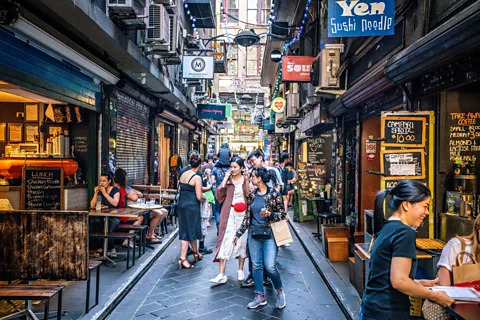
Ranked third, Melbourne edged out its harbourside rival Sydney on the strength of its combined culture and environment score of 96, one of the highest in the index. For residents, that cultural depth comes to life in its neighbourhoods, where each suburb has its own distinct character.
“Melbourne is a big city that somehow behaves like a village,” said Anne Marie Lennon, general manager of the Crowne Plaza Carlton, who has worked across the UK, Ireland and Australia. “People here are genuinely curious about you. And then there’s the culture, the food, the music, the fashion, the art. Every suburb has its own vibe and identity.”
Lou McGregor, a Scot who has lived in Melbourne for 20 years, agrees. “Footscray is my local [area] and one of the best places to eat and drink in the city – every culture, every cuisine and always buzzing. Fitzroy has cool little bars and vintage shops, St Kilda is perfect for a walk along the beach and Carlton is hard to beat for Italian food and a wander through the beautiful old streets.”
When McGregor has visitors, she takes them to the State Library’s domed reading room, Hosier Lane’s ever-changing street art, the National Gallery of Victoria and the iconic laneways and arcades. “That’s Melbourne to me – a city that’s curious, creative and full of unexpected little moments around every corner,” she says.
For a glimpse of everyday Melbourne, Lennon points visitors to the 39-hectare Princes Park. “Dog walkers, joggers, families, people just sitting and breathing. It’s unhurried and real. That’s the Melbourne I live in daily, and it never gets old,” she said. “You can move 2km (1.2 miles) and feel like you’ve stepped into a completely different world.”
 Getty Images
4. Sydney
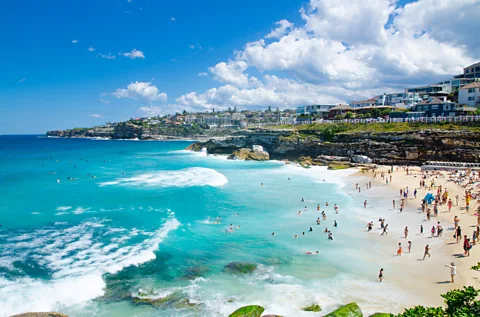
Matching Melbourne’s overall score of 97, Sydney took fourth place with perfect scores in healthcare and education. But residents say it’s the easy access to nature, multicultural neighbourhoods and outdoor lifestyle that make the city so liveable.
“Sydney makes it easy because wherever you are, you’re never too far from a great view, whether it’s the harbour, the Blue Mountains or the beaches,” said Steve Kamper, the New South Wales minister for jobs and tourism. “The mix of cultures, the neighbourhoods, the incredible food and the lifestyle make Sydney special. It’s a global city, but it still feels like a collection of local communities.”
Venture beyond the usual tourist spots like Harbour Bridge or Bondi to see this, said Kamper, to an inner west suburb. “Burwood is the Sydney locals know and love,” he said. “It’s full of life, packed with incredible food and it’s one of the best places to experience Sydney’s multicultural character.” He’d also be sure to take visitors to a [Australian rules] footy game. “Very few places in the world do sport like Sydney,” he said.
After living on four continents, French jewellery designer Julie Livni still finds herself surprised by Sydney. “People don’t wait for the weekend to go to the beach or have a swim, they make it part of their daily routine,” she said. For her, liveability begins with daily sunrise walks from Bondi to Bronte with her girlfriends. “As a business owner and mum of two, life moves pretty fast, so that hour by the ocean is my reset,” she said. “It’s the best way to start the day.”
She would take visitors to Tamarama Beach for sunrise, followed by coffee in Bondi, and the ferry from Rose Bay. “Not necessarily to get anywhere, but just to enjoy seeing the Opera House and the harbour from the water,” she says, stopping for lunch at Uncut Seafood.
“Sydney is also incredibly multicultural, with amazing food and people from all over the world, yet it still has such a relaxed, laid-back atmosphere,” she added. “It’s a rare combination for a major city.”
 Getty Images
5. Zurich
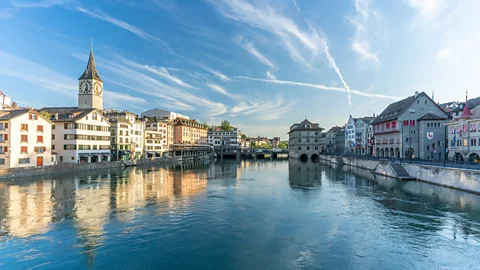
Despite slipping from joint-second spot in 2025 to fifth this year, residents say Zurich’s combination of efficiency and easy access to nature underpin its exceptional quality of life.
“Zurich wouldn’t be the same without the lake and the rivers. Every day I pass by either Lake Zurich, river Limmat or river Sihl and take some time for myself,” says Manuela Leonhard, a Zurich native and content creator. “The waters are fresh and clear and we have more than 1,200 fountains throughout the city you can drink water from.”
To show visitors why she loves Zurich so much, she takes them to Lindenhof, a once-Roman fort that is now a hilltop square with views over the Limmat and the Old Town on both banks of the river. She also recommends the terraces at ETH urich and the University of Zurich for sweeping views across the city. “And I always walk with them through Old Town, the heart of Zurich, with its narrow streets and little shops,” she said.
Even after a lifetime in Zurich, Leonhard is still surprised by how immaculately the city is maintained. “No matter what big event takes place in Zurich, the next morning you can’t tell what happened the night before,” she said. “That amazes me every single time.”